Tuesday, August 31, 2010

Update on Pavlovsk

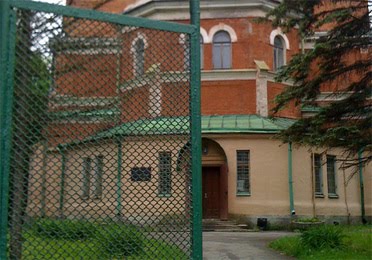
National Public Radio provided additional information on the proposed sale and development of Pavlovsk Experiment Station in an interesting article, Researchers Fight to Save Fruits of Their Labor. This issue was first noted here in the previous post, Can Twitter Save Rare Pavlovsk Plants?

Leonid Burmistrov, a fruit and crop researcher at the institute for 40 years was interviewed for the story.
Scientists have left over the years, he says, as the government cut funding. But through it all, he says, the research station has collected fruit and berry varieties from around the world, stayed in touch with scientists abroad and cataloged everything.

"Like [what is] winter-resistant, resistant to different kind of fungi, diseases or bacteria," Burmistrov says. "What is the quality? What is the taste? And so, so on."

The idea of ripping these plants from the ground for the sake of development?

"No," he says sternly, standing amid fruit trees. "It's not possible to think about the possibility."
But it still a very real possibility. Here is the podcast.

Saturday, August 28, 2010

Cloned Steer Wins Iowa 4H Competition


"I Pledge my Head to clearer thinking,
my Heart to greater loyalty,
my Hands to larger service,
and my Health to better living,
for my club, my community, my country, and my world."

The blue-ribbon winner of the Iowa State Fair "Big Steer" competition at the Iowa State Fair this year was a clone of last year's winner.

As was reported in the Des Moines Register, "Doc" is a clone of "Wade," the 2008 champ, and both were shown by Tyler Faber, the son of the owner of a company specializing in advanced livestock genetic reproductive techniques. Tyler's father stated that "[t]he steer was cloned and shown at the fair to highlight cloning and what it can do." Doc's entry into the competition did not violate any rules, and his status as a clone was listed on his registration.

Even if one accepts Doc's success as evidence of the scientific advantage that cloning may present to the production of individual livestock, I have some problems with it . . .

First, again assuming that cloning a prize animal presents an advantage - doesn't cloning last year's winner raise some kind of fairness issue? How about all of the teens that do not have an extra $15,000 - 20,000 to invest in a cloned embryo?

Second, the whole purpose underlying Doc's entry seems to have been marketing. What an advertisement for Tyler's dad's business - the name of which is intentionally omitted from this blog. I don't like mixing advertising and children - and I don't like a government sponsored youth activity being used to showcase an individual's business venture.

Third, I am not comfortable with the not-so-subtle effort to advance the acceptability of cloning through 4-H channels. The fact that Doc was allowed to compete and to win is clearly part of the effort to get the public used to the idea of livestock cloning. It sends the message that cloning is not only okay, it produces winners.

With regard to my indoctrination complaint, however, I have to admit that I am off the mark historically - look what I found on the early history of 4-H, dating back to around the beginning of the 20th century -
[R]esearchers at experiment stations of the land-grant college system and USDA saw that adults in the farming community did not readily accept new agricultural discoveries. But, educators found that youth would "experiment" with these new ideas and then share their experiences and successes with the adults.

So rural youth programs became a way to introduce new agriculture technology to the adults.
I guess that most governments see the potential value of youth organizations. It is significant. I would argue that a special responsibility should go along with the associated educational role, however, particularly in a democracy. I hope that readers take the photo of the Young Pioneers with the good humor that was intended.

Of course, my view of cloning colors my perceptions. I admit that if we were encouraging 4H youth to learn how to raise livestock without sub-therapeutic antibiotics instead of advising them that it is a good way to promote weight gain, I'd probably be all for it.

But, I find cloning to be such an ill-advised technological path. When we are now realizing that we have a significant problem with a lack of bio-diversity in almost all aspects of modern agricultural production, we develop an incredibly expensive new way to exactly replicate an individual animal? Who in the livestock industry is going to benefit from this technology? What is it going to do for beginning producers and smaller ranchers? What are the benefits for consumers?

I think we can do better with science and technology. We have some real problems to address.

Wednesday, August 18, 2010

Publication Opportunity: Journal of Food Law & Policy

I am pleased to serve as advisor to the Journal of Food Law & Policy at the University of Arkansas School of Law. This Journal, the only student-edited U.S. law journal focused exclusively on food law issues was started in July 2005, and it is now well established in the academic community. Available on both Westlaw and Hein On Line, the Journal features articles on a wide range of current issues of food law and policy and includes regular food law updates from the United States, the European Union, and Canada. The Journal is published twice a year and is edited by some of the top law students at the University of Arkansas School of Law.

This year's Journal editor, Scott Lar asked me to post a notice inviting both submissions and subscriptions.

Article submissions can be e-mailed to foodlaw@uark.edu. The Journal is seeking articles for publication Spring 2011, but may also have room for an additional article in the Fall 2010 issue - a good opportunity for a quick publishing turn-around.

For more information, or to make a submission, contact the Journal via e-mail at foodlaw@uark.edu or by phone at (479) 575-2754.

The yearly subscription rate is $34. Subscription payments can be mailed to:
Journal of Food Law and Policy
University of Arkansas School of Law
107 Waterman Hall
Fayetteville, AR 72701

Tuesday, August 17, 2010

Student Opportunities

In conjunction with the annual conference for the American Agricultural Law Association, this opportunity has emerged. I encourage all current law students to take part.

Saturday, August 14, 2010

Can Twitter Help Save Pavlovsk Rare Plants?

Worldwide, many have been waiting and hoping for word from Russia that the irreplaceable and historic Pavlovsk Experimental Station outside of St. Petersburg, Russia would be spared destruction, hoping that the thousands of rare trees and other plants grown there could be saved.

Ninety percent of the varieties grown at Pavlovsk are not available anywhere else in the world. Included are unique varieties of strawberries, plums, pears, apples and currants. The destruction of the plants at the Pavlovsk Station will eliminate those varieties - a particularly troubling and ironic outcome in this, the International Year of Biodiversity.

The scientists who are attempting to save the station lost a court battle last week. The court granted rights to the federally-owned land to a government housing development agency that plans to demolish the station and construct housing units. The scientists have appealed the court's decision.

Interest in the preservation of these rare plants is not sentimental interest. They provide the raw material for developing new varieties of crops - something that will likely be needed as we confront water shortages, a changing climate, and changing plant pests.

As was reported in The LA Times -

"Saving varieties is critical for breeding," said Kent Bradford, a plant scientist at UC Davis. "When breeders are faced with a new issue, like a disease or growing in a new area, they need to go back to that diversity to see which ones are resistant or have traits that they like."

The Vavilov Research Institute that runs the Pavlovsk station holds a special place in Russian history. During the World War II siege of the city, Institute scientists chose to starve to death rather than eat the precious seeds in their rare seed bank.

The next court hearing, anticipated in about a month, will finalize the fate of the station and its treasures. In the meantime, Cary Fowler of the Global Crop Diversity Trust called upon those concerned to tweet Russian President Medvedev with their concerns and provided the suggested message in both English and Russian in his Huffington Post blog posting. On August 13, President Medveded responded, on Twitter, with the following tweet:

"Received the Civic Chamber's appeal over the Pavlov Experimental Station. Gave the instruction for this issue to be scrutinised."

I just decided to follow him on Twitter - KremlinRussia_E. I notice that he and the White House follow each other, which I guess is a good thing . . . You can follow the discourse and/or voice your opinion at the hashtag #Pavlovsk. Global Crop Diversity Trust also has an online petition to sign.

Tuesday, August 03, 2010

Agricultural Law: Inflated Claims of Antibiotic 'Over-use'

With regard to Mr. Miller's recent post, Agricultural Law: Inflated Claims of Antibiotic 'Over-use', herd health is an interesting subject and some would argue that such a claim is also inflated.